How to Buy Gift Cards with Crypto?
Last updated: May 21, 2026 10 min read
Viktorija Dvariskyte
Cryptocurrency has become a practical everyday payment tool for millions of people – and buying gift cards is one of the most popular ways to put it to use. Whether you’re holding Bitcoin, Ethereum, Litecoin, USDT, or any number of other coins, you can convert that crypto into spending power at thousands of major brands within minutes.
This guide covers every method for buying gift cards with crypto, the best platforms to use, which coins are most widely accepted, and everything you need to know to make a smooth purchase.
Paying for Gift Cards with Cryptocurrencies
Cryptocurrencies have come a long way since Bitcoin (BTC) was introduced in 2009 as the first decentralized digital currency. Today, the crypto market includes a wide variety of options, each with its own unique features. Ethereum (ETH) enables smart contracts, Litecoin (LTC) offers faster transactions, and Bitcoin Cash (BCH) focuses on scalability. Ripple (XRP) streamlines cross-border payments, while stablecoins like Tether (USDT) and USD Coin (USDC) provide price stability. Meme coins like Dogecoin (DOGE) and Shiba Inu (SHIB) have gained popularity, while privacy-focused coins like Monero (XMR) and Dash (DASH) prioritize anonymity. With so many options, cryptocurrencies are now being used for more than just trading – they’re also a convenient way to buy gift cards.
Here’s a table summarizing popular cryptocurrencies, their ticker symbols, and a brief description of each:
Steps to Purchase Gift Cards with Cryptocurrency
- Visit the CoinGate Gift Cards store.
- Navigate to the Categories → All Gift Cards section and select your preferred card (e.g., Hotels.com, Apple, Sephora, Walmart).
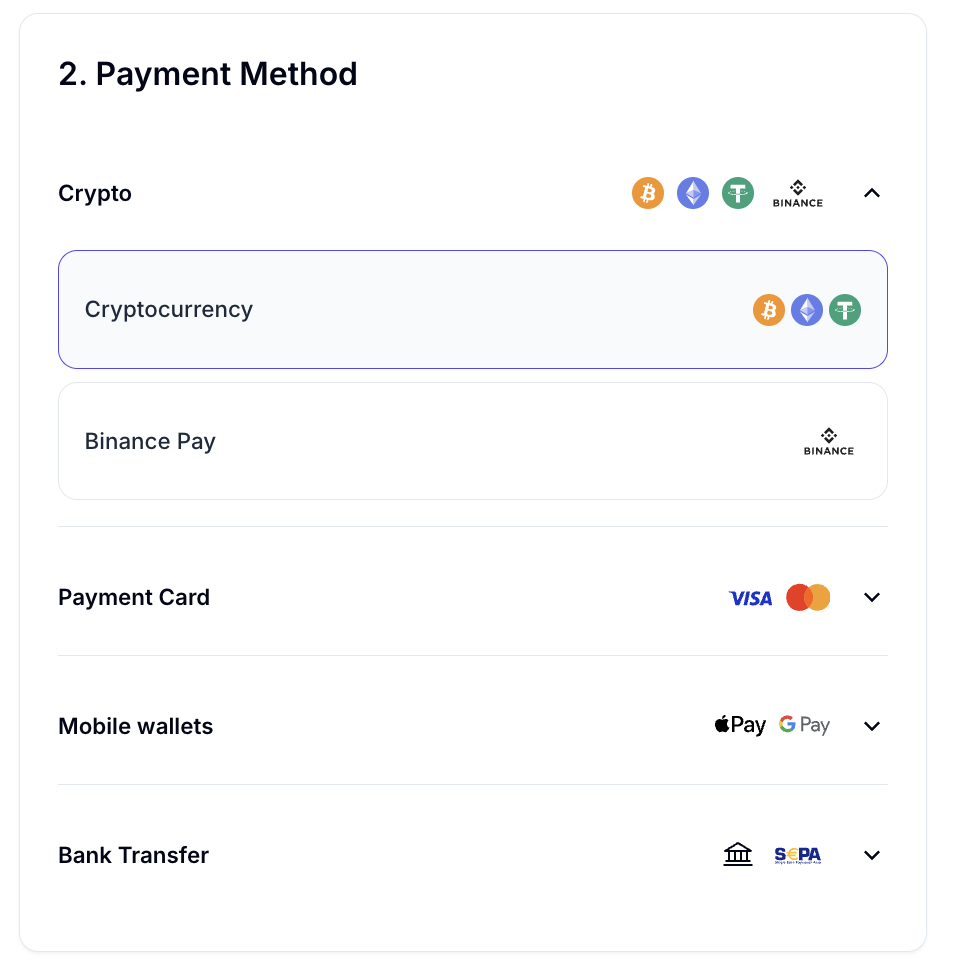
- Enter the digital gift card amount and select your preferred cryptocurrency, such as USDT or BTC, as the payment method.
- CoinGate will generate a wallet address for your selected crypto. Be sure to include the provided reference number in the transaction details.
- Once the Gift Cards team confirms receipt of your payment, your e-gift card will be processed.
- After confirmation, you’ll instantly receive your online gift card via email from CoinGate Gift Cards.
What Else Can You Buy with Crypto?
- Buy a VPN with Crypto
- Buy VPS and Hosting with Crypto
- Buy Proxies with Crypto
- Buy AI Website Building Tools with Crypto
- Buy Hardware Wallets with Crypto
- Buy eSIMs with Crypto
Which Cryptocurrencies Are Accepted for Gift Card Purchases?
Acceptance varies by platform, but the most widely supported coins include:
- Bitcoin (BTC) – the most universally accepted cryptocurrency; supported on virtually every crypto gift card platform
- Ethereum (ETH) – the second most common option; fast growing in acceptance
- Litecoin (LTC) – often preferred for smaller purchases due to lower fees and faster confirmations
- USDT (Tether) – a stablecoin pegged to the US dollar, useful if you want to avoid price volatility during checkout
- USDC – another popular US dollar stablecoin with broad platform support
- Bitcoin Cash (BCH) – lower fees than Bitcoin, supported on most major platforms
- Ripple (XRP) – accepted on select platforms
- Dogecoin (DOGE) – increasingly supported thanks to its large user base
- Binance Coin (BNB) – accepted on Binance’s ecosystem and several third-party platforms
- Solana (SOL), Monero (XMR), Dash – available on select platforms
If price stability matters to you, stablecoins like USDT or USDC are worth considering – the amount you send equals the amount charged, with no volatility risk during the transaction window.
What to Know Before You Buy
Network fees vary by coin. Bitcoin and Ethereum transactions carry network fees that can fluctuate significantly. Litecoin, Bitcoin Cash, and most stablecoins on faster networks typically have lower fees. For smaller gift card purchases, it’s worth choosing a coin with minimal fees.
Price volatility during checkout. Most platforms lock in the crypto amount at the time of order generation and hold it for several minutes. If you don’t send within that window, the rate may refresh. Stablecoins eliminate this concern entirely.
Transaction confirmation times differ. Bitcoin averages 10+ minutes per block confirmation. Ethereum is typically faster. Litecoin and some others confirm in under two minutes. Most platforms release your gift card after one confirmation.
Purchases are final. Crypto transactions are irreversible. Once you send funds to a platform’s address, the process completes. Double-check the brand, denomination, and region before sending.
Regional restrictions. Gift cards are often region-locked. A US Amazon card won’t work on the UK Amazon store. Always confirm the card is valid where you intend to use it.
Tax implications. In many countries, using crypto to buy anything – including gift cards – is a taxable event. You may owe capital gains tax on any appreciation since you acquired the coin. Consult a tax professional if you’re unsure how this applies to you.
Tips for a Smooth Purchase
Use a stablecoin if you’re price-sensitive. USDT or USDC purchases remove the guesswork around exchange rates and volatility. What you see at checkout is exactly what you pay.
Check network fees before sending. For BTC and ETH especially, fees can spike during busy periods. A quick check on a fee estimator can save you a few dollars, especially on smaller purchases.
Copy the wallet address – don’t type it. Always copy and paste the receiving address rather than typing it manually. A single character error means your funds go nowhere recoverable.
Save your transaction hash. After sending, copy the transaction ID (hash) from your wallet. This is your proof of payment and what any support team will need if something goes wrong.
Stick to established platforms. Use well-known services like Coingate or Bitrefill, especially for your first purchase. They have customer support, track records, and fast delivery.
Match the coin to the purchase size. Using Bitcoin for a $10 gift card may cost you $5 in fees. Litecoin or a stablecoin makes more sense for smaller amounts.
Frequently Asked Questions about Crypto Payments
Can You Really Buy Gift Cards with Cryptocurrency?
Yes, absolutely. A growing number of dedicated platforms let you pay with Bitcoin, Ethereum, Litecoin, USDT, and dozens of other coins to purchase digital gift cards from major brands. The gift card code is delivered almost instantly after your transaction confirms on the blockchain. It’s one of the most mature and reliable use cases for spending crypto in the real world.
Which Cryptocurrencies Are Accepted for Gift Card Purchases?
The most widely accepted coins across major platforms are:
- Bitcoin (BTC) – supported everywhere
- Ethereum (ETH) – accepted on most platforms
- Litecoin (LTC) – popular for smaller purchases due to low fees
- USDT (Tether) – widely supported stablecoin
- USDC – another major stablecoin with broad platform support
- Bitcoin Cash (BCH) – low fees, widely supported
- Dogecoin (DOGE), XRP, BNB, Solana (SOL) – available on select platforms
If you want to avoid price volatility during checkout, stablecoins like USDT or USDC are the safest choice – the amount you send equals the amount charged, with no exchange rate surprises.
How Does the Purchase Process Work?
The typical flow on a crypto gift card platform goes like this:
- Browse or search for the brand you want
- Select your denomination and region
- Choose your cryptocurrency at checkout
- The platform generates a wallet address and the exact amount to send
- Send the crypto from your wallet to that address within the time window (usually 10-30 minutes)
- Once the transaction confirms on the blockchain, the gift card code is emailed to you or shown on screen
The entire process usually takes between two and ten minutes, depending on which coin you use and current network conditions.
How Long Does It Take to Receive the Gift Card?
It depends on the cryptocurrency you use and how congested the network is at the time. As a rough guide:
- Litecoin, Bitcoin Cash – typically under two minutes
- Ethereum – usually one to five minutes
- Bitcoin – can range from a few minutes to 30+ minutes depending on the fee you set and network activity
- Stablecoins (USDT on faster networks) – often under a minute
Most platforms release the gift card after one blockchain confirmation. If you use a higher transaction fee, confirmations come faster.
Are Crypto Gift Card Purchases Safe?
Using a reputable, established platform is safe. Platforms like Coingate and Bitrefill have processed millions of transactions and have clear processes for handling issues. The main risks to be aware of are:
Sending to the wrong address – crypto transactions are irreversible. Always copy and paste the receiving address rather than typing it manually.
Missing the payment window – most platforms hold your rate for a limited time. If you don’t send within that window, the order may expire and you’ll need to start again.
Using unknown platforms – stick to well-reviewed, established services. If a deal looks too good to be true, verify the platform carefully before sending any funds.
What Happens If I Send the Wrong Amount?
Most platforms have a support process for this. If you underpay, the order usually waits for the correct amount or gets cancelled after the time window expires. If you overpay, many platforms will credit the difference or refund it. In either case, contact support immediately and provide your transaction hash – that’s the unique ID for your blockchain transaction, which you can find in your wallet after sending.
What Is a Transaction Hash and Why Does It Matter?
A transaction hash (also called a tx hash or tx ID) is a unique alphanumeric identifier assigned to every blockchain transaction. It’s generated the moment you send crypto and can be used to look up the status of your payment on a blockchain explorer like Etherscan (for ETH) or Blockchain.com (for BTC).
Always save your transaction hash after sending. If your gift card doesn’t arrive, this is the first thing any support team will ask for. It proves your payment was sent and allows them to verify the transaction.
Why Are Crypto Network Fees So Variable?
Network fees (called gas fees on Ethereum, or miner fees on Bitcoin) are paid to the validators or miners who process and confirm transactions. These fees fluctuate based on how busy the network is at any given moment. During periods of high activity, fees spike. During quieter periods, they drop.
For Bitcoin and Ethereum, fees can range from under a dollar to several dollars depending on conditions. Litecoin, Bitcoin Cash, and stablecoins on faster networks typically have much more stable and lower fees – making them better choices for smaller gift card purchases.
Can I Use Crypto to Buy Gift Cards Without Making an Account?
Yes, on some platforms. CoinsBee and a few others allow you to buy gift cards by simply entering an email address – no account registration required. Coingate and Bitrefill do require a basic account for most purchases. Requirements vary, so check the platform’s policy before you start if account-free purchasing is important to you.
Do I Need to Complete KYC (Identity Verification) to Buy Gift Cards with Crypto?
Most crypto gift card platforms have minimal or no KYC requirements for standard gift card purchases. You typically don’t need to submit ID documents, unlike a centralized exchange. Some platforms may require verification for larger orders or in compliance with local regulations, but for everyday gift card amounts this is rarely an issue.
Is Buying Gift Cards with Crypto a Taxable Event?
In most countries, yes. Using cryptocurrency to make a purchase – including buying a gift card – is generally treated as a disposal of an asset, the same as selling. If your crypto has appreciated since you acquired it, you may owe capital gains tax on the difference.
The rules vary significantly by country, and not everyone is in the same situation. If you’re making regular crypto purchases, keeping a record of each transaction (amount, coin, price at time of purchase) is important for accurate reporting. Consult a tax professional if you’re unsure how the rules apply to you.
Written by:
Viktorija Dvariskyte
Related Articles