


Accept crypto with CoinGate
Accept crypto with confidence using everything you need in one platform.
How to buy crypto with a credit or debit card (Visa/Mastercard)
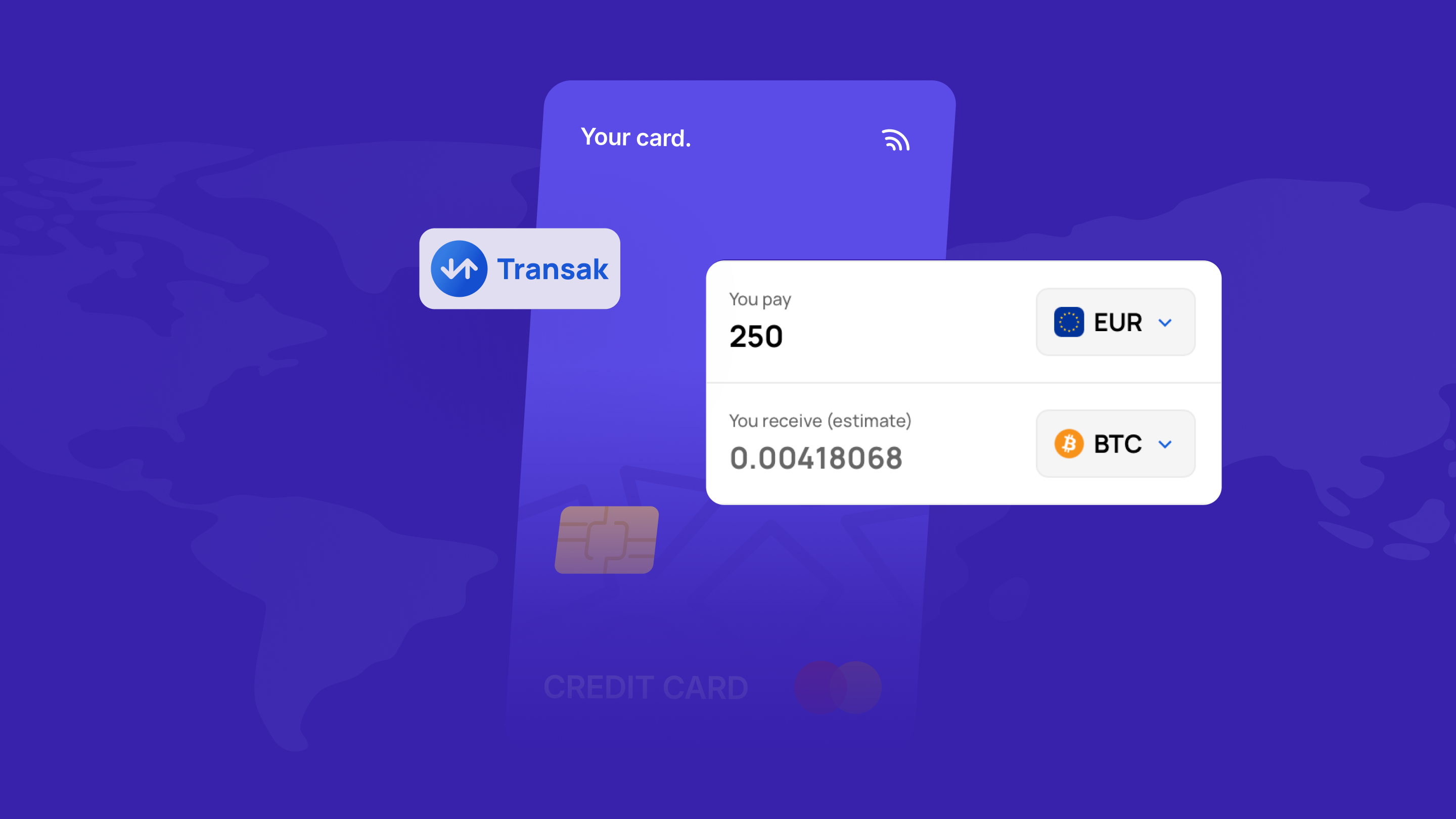
Buying crypto with a credit or debit card is one of the easiest ways to get started.
You choose the coin, enter the amount, add your wallet address, complete the checkout, and receive the crypto in your wallet. No need to fund an exchange account first. No need to overcomplicate it.
At CoinGate, that flow starts on our Buy page. From there, you continue through Transak’s widget to complete verification and pay with your Visa or Mastercard, although other payment options might also be available depending on your location.
If you have never done it before, it might sound like a lot. In reality, it is fairly straightforward once you know what to expect.
Why buy crypto with a card?
Most people choose cards for one reason: convenience.
A bank card is familiar. You already know how card checkouts work. That makes buying crypto feel much less intimidating, especially if this is your first purchase.
There is also the speed factor. Compared to manual bank transfers, card payments are usually faster. You go from choosing an asset to receiving it in your wallet in a much shorter time.
And then there is accessibility. If you already have a Visa or Mastercard and a crypto wallet, you are close to being ready.
What you need before you begin
Before you buy crypto with a credit or debit card, make sure you have three things:
1. A supported Visa or Mastercard
This can be either a credit card or a debit card, depending on what your bank allows.
2. A crypto wallet
You need a wallet address where the purchased crypto will be sent. This is important. You are buying crypto to your own wallet, not leaving it somewhere in limbo.
3. Your ID documents, just in case
Verification is a normal part of fiat-to-crypto purchases. If you’re doing it for the first time, you will need to confirm your identity before the order goes through.
That is the practical side of it. Nothing exotic. Just the usual steps you would expect when real money is involved.
Step 1: Choose the crypto you want to buy
The first step is simple. Pick the cryptocurrency you want to buy.
This could be Bitcoin, Ethereum, USDC, Solana, Litecoin, or another supported asset. Then enter the amount you want to spend, or the amount of crypto you want to receive.
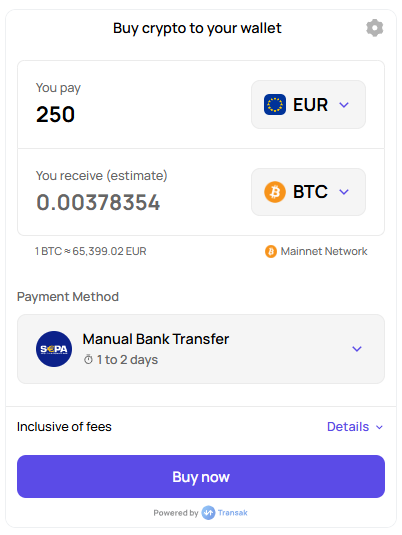
The asset you choose affects the wallet you need, the network you should use, and sometimes the final purchase options you see during checkout. So before moving on, make sure you are buying the right coin for the right purpose.
Step 2: Enter your wallet address
Next, enter the wallet address where your crypto should be sent.
This is one of the most important steps in the whole process. If the address is wrong, the funds may go to the wrong place. If the network does not match, you can run into unnecessary problems. So slow down here and check everything twice.
A few basic rules help:
- copy and paste the wallet address instead of typing it manually
- double-check the first and last characters
- make sure the selected network matches your wallet
- do not reuse old wallet details blindly without checking them again
This takes a few extra seconds. It is worth it.
Step 3: Continue to checkout with Transak
Once you have entered the purchase details, you continue to the Transak flow.
This is where the payment side becomes more structured. You review the quote, confirm the amount, choose your payment method, and move forward with the required checks.
For most users, this is where the process starts feeling like a normal online purchase, just adapted for crypto.
Step 4: Complete verification if needed
If this is your first purchase, or if the transaction requires it, you may be asked to complete identity verification. That is normal.
Crypto card purchases sit at the intersection of payments, compliance, and fraud prevention. So verification is part of the process, not some strange extra obstacle thrown in at the last second.
Usually, this means providing basic personal details and submitting identity documents. In some cases, you may also need to complete a selfie check or confirm additional information.
It depends on the transaction, the region, and the payment provider’s requirements.
The main thing to understand is this: verification is there so the transaction can be processed properly and securely.
Step 5: Pay with your Visa or Mastercard
After that, you move to payment.
This is the familiar part. You enter your card details, confirm the purchase, and complete any extra authentication your bank requires. That might include a 3D Secure prompt, a one-time code, or approval in your banking app.
At this stage, it is just a card payment flow adapted to a crypto purchase.
Some transactions go through quickly. Others may be declined by the bank. That does not always mean something is wrong with the provider or the card itself. Some banks are simply more restrictive when it comes to crypto-related payments.
If that happens, try a different supported card or check with your issuer first.
Step 6: Receive crypto in your wallet
Once the payment is approved and the order is processed, the crypto is sent to your wallet.
In many cases, this happens fairly quickly. However, the exact timing can vary depending on payment confirmation, verification checks, and blockchain conditions.
That part is important because users often expect everything to happen instantly.
Sometimes it does. Sometimes it takes a little longer. That is normal.
Why this method works well for beginners
If you are new to crypto, buying with a card is one of the easiest entry points.
There is less friction. You do not need to learn an exchange interface first. You do not need to wire funds manually and wait. You do not need to piece together multiple tools just to make one purchase.
Instead, you go through a familiar sequence:
- choose the asset
- enter the wallet address
- verify if needed
- pay with your card
- receive the crypto
Common problems when buying crypto with a card
Even when the process is simple, a few things can still trip people up.
1. The card gets declined
This is common enough to mention upfront.
Some banks do not allow crypto purchases. Others flag them more aggressively than regular card payments. In some cases, the transaction may fail because of limits, insufficient funds, or issuer-side security checks.
If your payment does not go through, do not panic. Check whether your bank supports this type of purchase first.
2. Verification takes longer than expected
Sometimes KYC is fast. Sometimes it needs a manual review.
This usually depends on the transaction details and the documents provided. If the information is clear and the upload is clean, things tend to move faster.
3. The wallet address is wrong
This is the mistake users have the most control over.
Always check the address. Then check it again.
If you send crypto to the wrong destination, there is usually no easy undo button waiting on the other side.
4. The final amount looks slightly different than expected
Card purchases may include fees, exchange rate spreads, network costs, or slight quote updates between the initial screen and final confirmation.
That is why reviewing the quote before paying matters. Not because the process is shady, but because money moves in real time and prices can shift.
Is it safe to buy crypto with a credit or debit card?
Yes, if you use a legitimate flow and pay attention to the important details.
That means:
- use the official CoinGate Buy flow
- enter the correct wallet address
- complete verification only through the proper checkout
- review the purchase details before confirming payment
The process itself can be safe. The bigger risk is usually user error, not the concept of buying crypto with a card.
That said, this is still crypto. Prices move. Markets swing. A smooth purchase flow does not remove investment risk.
So treat the payment process seriously, and treat the asset you are buying seriously too.
FAQ
Can I buy crypto with both a credit card and a debit card?
Yes. You can use either a credit card or a debit card, as long as it is supported and your bank allows the transaction.
Can I use Visa and Mastercard to buy crypto?
Yes. Visa and Mastercard are among the most common card payment options for crypto purchases in this flow.
Do I need a wallet before buying crypto?
Yes. You need a wallet address because the purchased crypto is sent directly to your wallet.
Why do I need to verify my identity?
Identity verification is a standard part of many fiat-to-crypto purchases. It helps complete the transaction securely and in line with compliance requirements.
How long does it take to receive the crypto?
It can be fast, often within minutes, but the exact timing depends on payment approval, verification, and blockchain conditions.
What if my card payment is declined?
This can happen if your bank blocks crypto-related transactions, if there are insufficient funds, or if an extra security check fails. In that case, try another supported card or contact your bank.
Can I buy crypto without using a bank transfer?
Yes. That is exactly why card purchases are popular. They give you a quicker route than manual bank transfers.
What is the most important step in the process?
Entering the correct wallet address and matching network. If those are wrong, the rest of the flow does not matter much.



Accept crypto with CoinGate
Accept crypto with confidence using everything you need in one platform.