


Accept crypto with CoinGate
Accept crypto with confidence using everything you need in one platform.
Can Crypto Payments Be Reversed? What Businesses Need to Know

Businesses usually ask this question late in the decision process.
Not when they are exploring crypto payments out of curiosity, but when they are seriously considering using them. At that point, speed and cost matter less than risk. More specifically, what happens when something goes wrong.
Crypto payments feel unfamiliar because they do not behave like card payments. There is no chargeback flow, no dispute window, and no central authority that can undo a transaction. That difference is often framed as a weakness.
In reality, it is a design choice. And for businesses, it changes how refunds and risk need to be handled.
Need a crypto payment solution for your business? Sign up for a CoinGate account.
Short answer: crypto payments cannot be reversed
Once a crypto payment is confirmed on the blockchain, it cannot be undone or reversed. There is no mechanism to cancel or roll back the original transaction.
This is not a limitation of payment processors or wallets. It is how blockchain networks are designed to work. Finality is a core feature, not an oversight.
That does not mean businesses cannot refund customers. It means refunds work differently than in card-based systems.
Peer-to-peer payments vs crypto payment processors
The answer to whether crypto payments can be reversed often depends on how the payment is made.
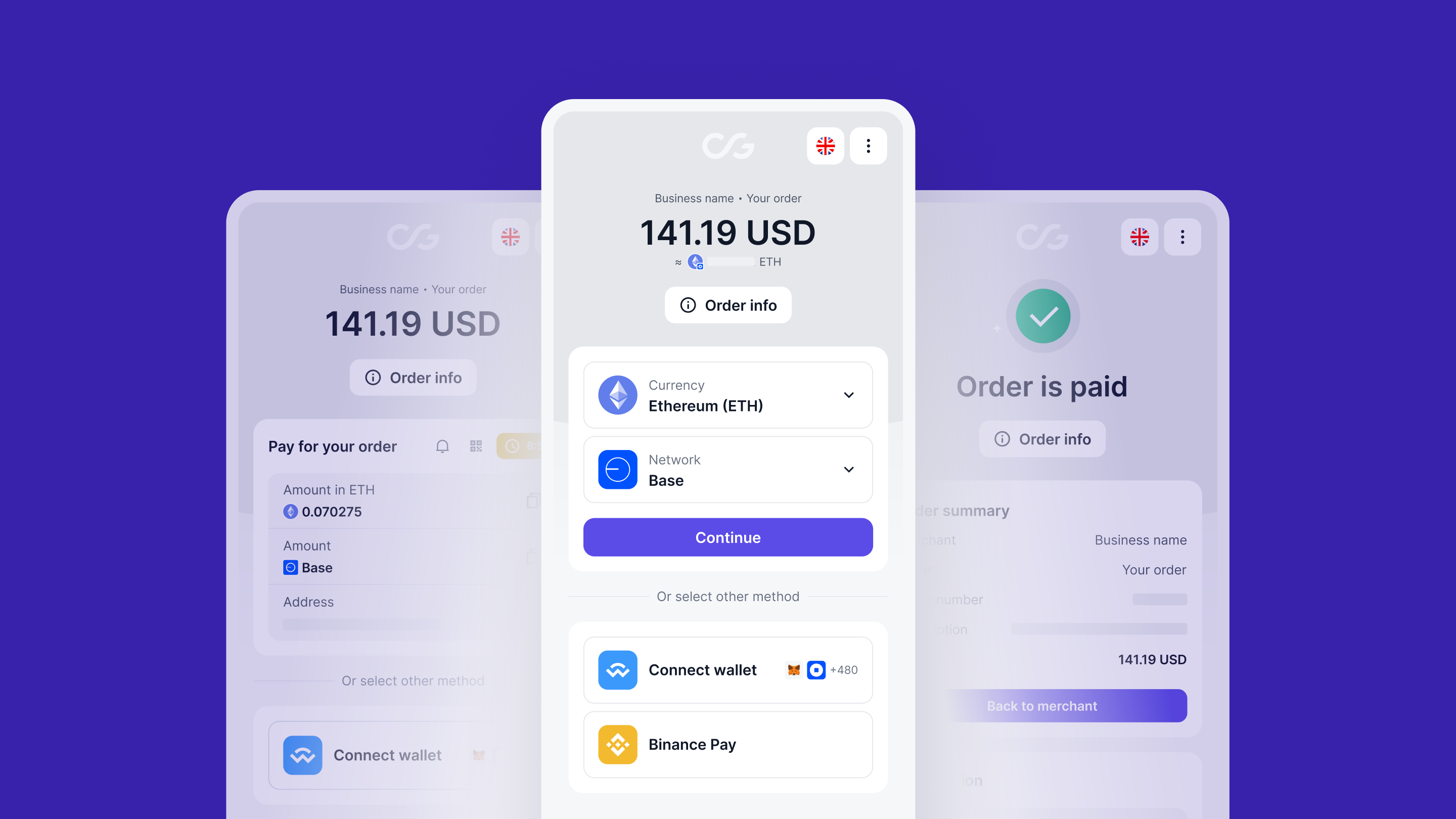
Peer-to-peer crypto payments are sent directly between wallets. Once confirmed, they are final. There is no intermediary, no built-in refund flow, and no dispute mechanism. Any reimbursement requires the recipient to send a new transaction manually.
Most businesses do not operate this way.
They accept crypto payments through payment processors such as CoinGate. These providers sit on top of blockchain networks and add operational layers such as order management, reporting, and refund workflows. While the underlying blockchain transaction remains final, the business experience around it changes significantly.
This distinction explains much of the confusion around crypto payment reversals.
How refunds actually work with crypto payments
A crypto refund is not a reversal of the original transaction. It is a new outbound payment initiated by the merchant.
In practice, this means:
- refunds can be full or partial
- refunds follow merchant policy, not disputes
- exchange rates apply at the time the refund is issued
If a product is priced at €10 and paid for in BTC, the merchant can refund up to €10. That amount is converted into cryptocurrency using the current exchange rate when the refund is processed.
This keeps pricing consistent while allowing flexibility in how value is returned to the customer.
Why crypto payments are designed to be irreversible
Blockchains operate without a central authority that can modify transaction history. Once a transaction is confirmed, it becomes part of a shared ledger maintained by the network.
There is no administrator who can undo it. This finality allows crypto payments to move globally without relying on banks, card networks, or clearing systems.
For businesses, crypto payments behave more like settled funds than provisional ones. The payment either arrives, or it does not.
How this differs from card payments
Card payments feel safer because they are reversible. For merchants, that reversibility comes with trade-offs.
Payments can be disputed weeks or even months later. Chargebacks introduce uncertainty, fees, and operational overhead. In many cases, businesses lose both the funds and the product or service.
Crypto payments remove this layer of risk. You can learn more about it in our article about how crypto protects businesses from chargebacks.
Once a payment is confirmed, it cannot be clawed back through disputes. Refunds happen only when the merchant chooses to issue them.
Responsibility shifts from external dispute systems to internal processes.
What this means for risk and fraud
Irreversibility removes chargeback risk entirely. There is no friendly fraud, no delayed disputes, and no third-party reversals.
For many businesses, especially those selling digital services or subscriptions, this significantly reduces payment risk. The trade-off is that refund handling and customer support must be designed deliberately.
Crypto replaces dispute-driven risk with process-driven responsibility.
How businesses should design around crypto refunds
Crypto payments work best when refunds are treated as a standard operational process, not an exception.
That usually means:
- clear refund policies
- internal approval flows
- accurate customer communication
- correct accounting treatment
When these elements are in place, refunds become predictable and manageable.
How CoinGate handles refunds in practice
At CoinGate, crypto payments are final on-chain, but merchants can issue refunds as structured, merchant-initiated transactions.
Refunds can be created from the account dashboard or via API. Merchants can issue full or partial refunds and choose the currency in which the refund is sent.
Refund amounts are calculated based on the original pricing and the current exchange rate, helping maintain clarity for both merchants and customers.
Refund requests are confirmed, tracked, and recorded alongside the original order. This makes the process auditable and transparent, while allowing businesses to offer money-back guarantees without relying on chargebacks or disputes.
Thinking it’s about time to have a crypto payment solution in your business? Take the first step and sign up for a CoinGate account.
Finality changes responsibility, not flexibility
Crypto payments cannot be reversed. That part is simple.
What matters is how refunds are handled once finality is understood. Crypto removes one category of payment risk and replaces it with merchant-controlled processes. With the right infrastructure, this leads to more predictable outcomes, not fewer options.
Using crypto payments with confidence
Understanding finality is essential when evaluating crypto payments. Working with a provider that supports structured refunds, clear reporting, and operational control turns finality into an advantage.
CoinGate offers a crypto payment solution designed to support refunds, accounting, and compliance in real business workflows. Not a client yet? Sign up for a business account.
FAQ: Crypto payment reversals and refunds
Can crypto payments be reversed?
No. Once a crypto transaction is confirmed on the blockchain, it cannot be reversed or rolled back. This applies regardless of the wallet, exchange, or payment processor used. Finality is a core property of blockchain payments.
If crypto payments are irreversible, how do refunds work?
Refunds are issued as new outbound transactions, not reversals of the original payment. The original transaction remains unchanged, and the merchant sends value back to the customer in a separate transaction.
Is there a difference between peer-to-peer payments and payments made through a processor?
Yes, and this is where most confusion comes from.
Peer-to-peer crypto payments are direct wallet-to-wallet transfers. Once confirmed, they are final, and any refund requires the recipient to manually send funds back.
When accepting crypto through a payment processor like CoinGate, the blockchain transaction is still final, but the merchant gains structured refund workflows, reporting, and tracking on top of that transaction.
Can businesses issue refunds automatically when accepting crypto?
Yes. Businesses that use a crypto payment processor can automate refunds using APIs and callbacks. This allows refunds to be created, tracked, and reconciled programmatically instead of handled manually.
Can a crypto refund be partial or issued multiple times?
Yes. Refunds can be issued as full or partial amounts. Multiple partial refunds can be made for the same order until the total refunded amount matches the original order value.
Are crypto refunds issued in the same currency that was paid?
Not necessarily. Refunds are usually defined in the order’s pricing currency (for example, EUR), then converted into the refund currency at the time the refund is issued. Depending on the setup, refunds can be sent in the same crypto asset or a different one.
How is the refund amount calculated if crypto prices have changed?
Refund amounts are based on the original pricing of the product or service, not on the crypto amount received. The fiat value is converted into the refund currency using the current exchange rate at the time the refund is issued.
This avoids disputes caused by crypto price fluctuations.
Do crypto refunds involve chargebacks or disputes?
No. Crypto payments do not support chargebacks. Refunds are initiated by the merchant according to their refund policy. This removes chargeback risk but requires clear refund processes and customer communication.
How can businesses track the status of a crypto refund?
Refunds have their own lifecycle and status, such as pending, processing, rejected, or completed. These statuses can be viewed in the dashboard or retrieved via API, allowing businesses to keep support, finance, and customers aligned.
Can customers confirm refund details before funds are sent?
Yes. Refund flows can include customer confirmation steps, such as verifying the refund amount and receiving wallet address, before the refund is completed. This reduces the risk of sending funds to an incorrect address.
Why is choosing the correct blockchain network important for refunds?
Crypto addresses are network-specific. Sending funds to the wrong network can result in permanent loss. Businesses should always confirm the customer’s wallet address and network before issuing a refund and rely on supported currency and network combinations.
Does CoinGate reverse crypto payments?
No. CoinGate does not reverse blockchain transactions. Instead, CoinGate enables merchants to issue structured, merchant-initiated refunds as new transactions, with tracking, reporting, and automation built in.
Is issuing crypto refunds safe for businesses?
Yes, when done correctly. Crypto refunds remove chargeback risk and give merchants full control over reimbursement decisions. With clear refund policies and proper infrastructure, refunds become predictable and auditable rather than risky.
Accept crypto with CoinGate
Accept crypto with confidence using everything you need in one platform.