


Accept crypto with CoinGate
Accept crypto with confidence using everything you need in one platform.
Settlement vs Payout vs Withdrawal, Explained
In payments, words matter more than most businesses expect.
Terms like settlement, payout, and withdrawal are often used interchangeably. In reality, they describe different stages of how funds move. Mixing them up leads to accounting errors, wrong expectations, and unnecessary friction.
This article explains what each term means, how they differ, and how they fit into the lifecycle of funds with an example of using CoinGate crypto payment solution.
Looking for reliable crypto payment rails for your business? Sign up for a CoinGate account or see the demo first.
Why these terms exist
Payments are not a single event but a process. From the moment a customer pays to the moment funds reach a bank account or another recipient, money passes through distinct stages. Each stage has different implications for accounting, access control, and compliance.
The terms settlement, payout, and withdrawal exist to describe those stages clearly.
The payment lifecycle, in simple terms
At a high level, the flow looks like this:
- A customer pays.
- The payment settles.
- Funds become available.
- Funds are paid out or withdrawn.
What settlement actually means
Settlement is the moment a payment becomes final. It answers the question whether the payment is finished.
In practical terms, settlement means the customer’s payment is confirmed and can no longer be reversed. The funds are credited to the merchant’s CoinGate balance.
Settlement does not mean money has reached a bank account. It means the payment itself is complete and ownership of the funds has changed.
What a payout is and what it isn’t
A payout is a transfer of funds to someone else.
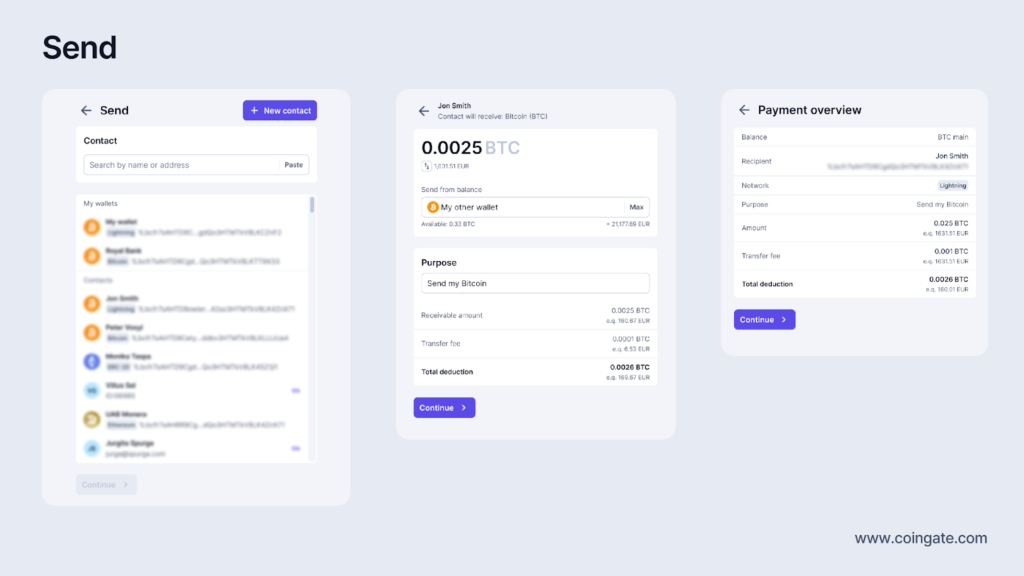
They are used to pay partners, suppliers, contractors, affiliates, distribute awards, and similar. They are sent to external wallet addresses using crypto or stablecoins.
A payout is not a withdrawal. It does not move funds to your own bank account.
What a withdrawal means
A withdrawal moves funds from CoinGate to your own bank account or crypto wallet.
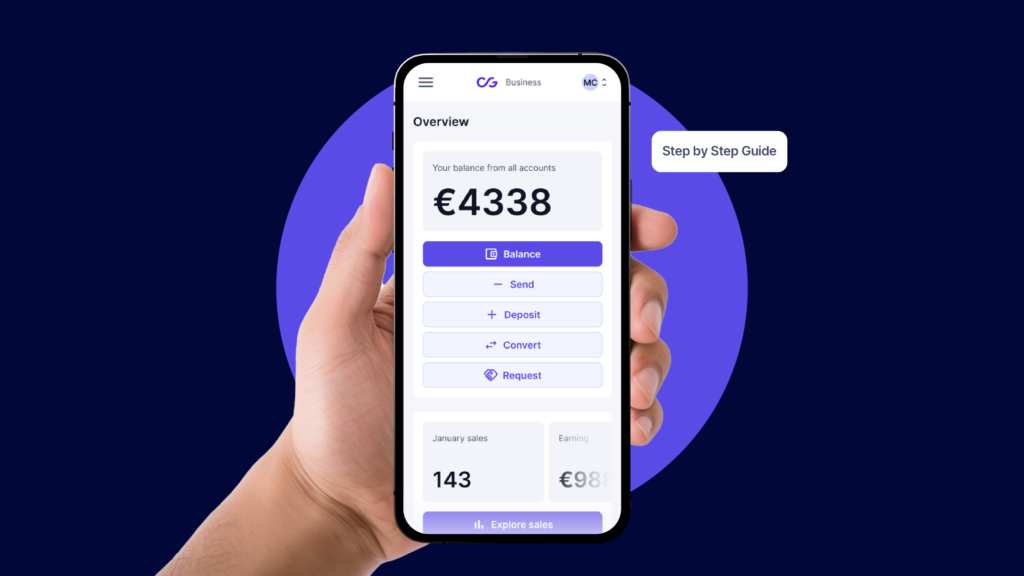
Withdrawals are typically fiat-denominated and use traditional banking rails, although crypto withdrawals to a non-custodial wallet is also an option. They are used for treasury management, cash flow, and accounting, which also includes means like deposits and currency conversion.
Want to learn more about it? Read our step-by-step guide on deposits, conversions and withdrawals at CoinGate.
Why these steps are separate
Settlement, payouts, and withdrawals are intentionally distinct.
Separating them provides clearer accounting, stronger controls, and better audit trails. It also gives businesses flexibility. Funds can be held, paid out, or withdrawn independently, depending on operational needs.
Combining these steps might feel simpler, but it would reduce visibility and control.
Common misconceptions
A few misunderstandings come up repeatedly:
- Settlement means money is in my bank.
No. Settlement means the payment is final and credited to your balance. - Payouts and withdrawals are the same.
No. Payouts send funds to others. Withdrawals send funds to your bank or your own wallet. - Funds must be withdrawn immediately.
No. Funds can remain in your CoinGate balance and be used for payouts, currency conversion, or refunds. - All outgoing transfers are withdrawals.
No. Crypto transfers to third parties are considered payouts, not withdrawals.
How this works at CoinGate
At CoinGate, the flow is structured deliberately.
Customer payments settle and appear in your account balance. From there, you decide what happens next. You can send payouts to external recipients or withdraw funds to your bank. Almost everything can be done manually via account dashboard or automated using API.
Each action is separate, traceable, and auditable. This structure supports both daily operations and long-term financial oversight.
Not a client yet? Sign up today.
Accept crypto with CoinGate
Accept crypto with confidence using everything you need in one platform.