


Accept crypto with CoinGate
Accept crypto with confidence using everything you need in one platform.
How to sell Bitcoin for fiat
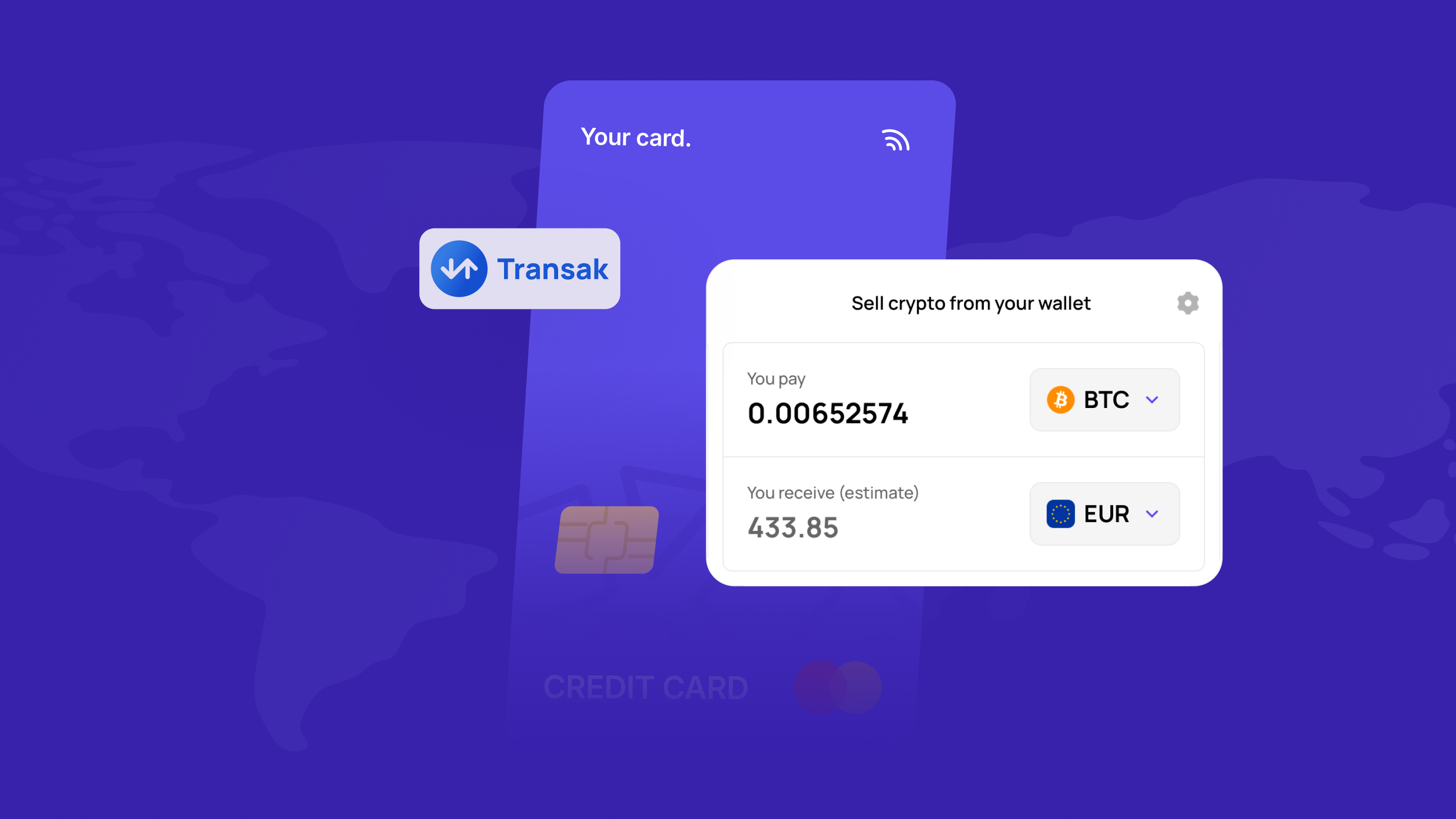
What does it actually take to turn Bitcoin into cash on your card?
Most guides overcomplicate the answer. They walk you through exchange signups, withdrawal queues, intermediate wallets, and a handful of steps that feel like they were designed to slow you down. For someone who just wants to sell BTC and see the money land, that’s a lot of noise.
There’s a shorter route. On the CoinGate Sell page, you can sell Bitcoin directly and receive fiat to your Visa or Mastercard. The flow is powered by Transak, and it handles the entire off-ramp from one place.
Here’s how it works, what to expect, and what to watch out for.
Holding Bitcoin you want turned into cash? Sell it here.
What you need before selling Bitcoin
Three things.
Bitcoin in a wallet you control. You’ll need to send BTC to a provided address during the sell flow, so make sure you have access to your wallet and enough balance to cover both the amount you want to sell and any network fees.
A Visa or Mastercard. Debit or credit, doesn’t matter. These are the only accepted card types for receiving the payout. Bank transfers aren’t available, and other card networks won’t work. If you try adding a different card type, the flow will return an error.
Willingness to verify your identity. Selling Bitcoin for fiat involves KYC, AML, and compliance checks. Transak handles these as part of the sell process. First-time users will go through identity verification before proceeding. Some lighter KYC flows may apply for smaller transactions in supported regions.
Selling Bitcoin for cash: step by step
The entire process happens through the CoinGate Sell page, which embeds a Transak widget that guides you from start to finish.
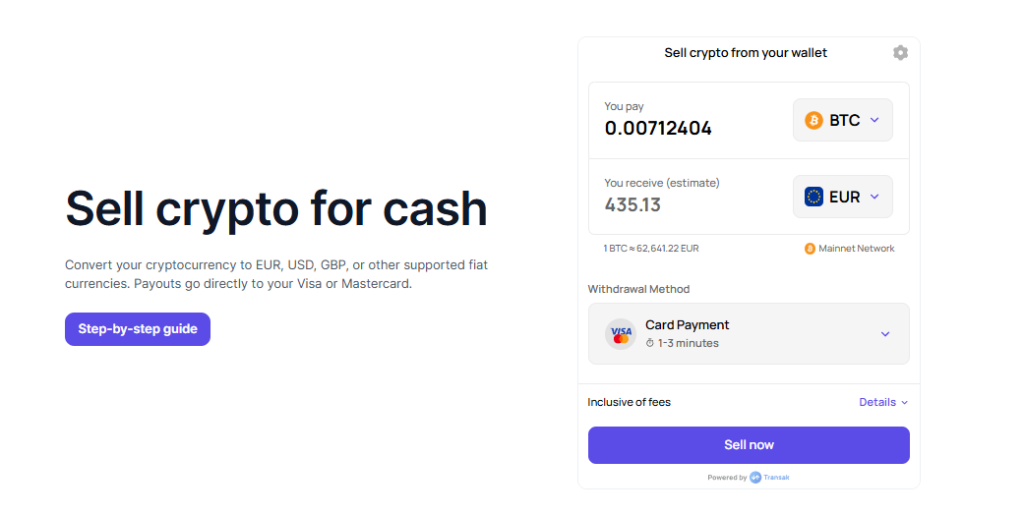
Pick Bitcoin and set the amount
Select BTC as the asset you want to sell. Enter the amount, either in Bitcoin or in the fiat equivalent you want to receive.
The widget will show you the estimated payout based on the current exchange rate, so you can decide whether the numbers work before committing to anything.
Add your card
Enter your Visa or Mastercard details: card number, CVV, and expiration date. Your billing address country and card-issuing country both need to be eligible for off-ramp payouts.
As part of the card setup, your bank runs a zero-dollar ($0) 3DS verification to confirm the card is valid. If you’ve sold through this flow before, previously saved cards will appear as an option.
Verify your identity
If it’s your first time using Transak, you’ll be prompted to complete KYC verification. This can include document uploads and, depending on the jurisdiction and transaction size, additional checks.
Returning users who already passed verification can skip this step in most cases.
Review the order
Before the transaction goes through, you get a full summary: the BTC amount, expected fiat payout, fees, and the card receiving the funds.
This is the step worth slowing down for. Check the numbers. Make sure the card is right. Read the fees. You’ll also need to confirm a risk disclaimer before proceeding.
Send Bitcoin and receive cash
Once you confirm, the flow provides a wallet address. Send your BTC to that address. After the transaction is confirmed on the Bitcoin network, the fiat payout is processed to your card.
Timing depends on several factors: network congestion, card processing speed, verification status, and region. Some transactions complete faster than others, but the steps remain the same regardless.
Things Bitcoin sellers should know
Network fees matter more with BTC
Bitcoin network fees fluctuate depending on how busy the mempool is. When the network is congested, sending BTC costs more. This is separate from any exchange or processing fees in the sell flow itself.
If you’re selling a smaller amount, the network fee can eat into a noticeable portion of the total. Worth checking before you initiate the transaction.
Confirmation times vary
Bitcoin transactions need at least one on-chain confirmation before the off-ramp can process the fiat payout. During busy periods, this can take anywhere from 10 minutes to over an hour.
There’s nothing the sell flow can do about this. It’s a Bitcoin network reality. However, once the confirmation lands, the fiat processing kicks in.
The exchange rate moves while you wait
Between the moment you confirm the sell order and the moment your BTC transaction gets confirmed on-chain, the Bitcoin price can shift. The rate you see during the review step is an estimate, not a locked-in guarantee.
For most everyday sell amounts, this isn’t a big deal. But if you’re selling during a volatile stretch, keep it in mind.
What can go wrong
Card rejected. Only Visa and Mastercard debit or credit cards work. Any other card type gets blocked. Even among eligible cards, some may not meet the requirements for off-ramp payouts, and the flow will show an error explaining why.
Verification delays. Documents sometimes need manual review, especially for first-time users or larger amounts. This doesn’t always mean something’s wrong. It just means additional checks are running.
Wrong card details. If the card number, CVV, or expiry is entered incorrectly, the payout can fail or stall. Double-checking here saves time later.
Order stuck in processing. Orders pass through states like PROCESSING, PENDING_DELIVERY_FROM_TRANSAK, COMPLETED, FAILED, CANCELLED, or EXPIRED. Some waiting between states is normal.
Lower payout than expected. Fees, rate movement, and processing conditions all affect the final number. The review step exists for exactly this reason.
Is selling Bitcoin for cash safe?
It depends on how you do it.
Completing the flow through the embedded Transak widget is the intended path. Transak operates with a regulated global footprint across the USA, UK, Canada, Australia, Poland, India, and Hong Kong, and holds ISO 27001:2022 and SOC 2 Type II certifications.
On the user side, safety comes down to attention. Enter the right card. Review the summary. Don’t rush the confirmation step. Most problems aren’t caused by the system. They’re caused by people skipping the parts that are there for their protection.
Why Bitcoin sellers have different needs
Selling Bitcoin isn’t quite the same as selling an altcoin you picked up last week.
For many holders, BTC has been sitting in a wallet for months or years. The decision to sell often comes with more weight behind it. Maybe the price hit a target. Maybe there’s a real expense that needs covering. Maybe the plan was always to cash out a portion at some point.
Whatever the trigger, the expectation is usually the same: a fast, clean path from BTC to cash, without the process eating into gains through unnecessary fees or delays.
That’s where a direct off-ramp helps. Instead of moving Bitcoin to an exchange, selling it there, and then withdrawing fiat through a bank transfer that takes days, you sell through one flow and the money goes straight to your card.
Selling Bitcoin through CoinGate vs. on an exchange
Exchanges work. They’ve always worked. But they also come with overhead that not everyone needs.
To sell Bitcoin on a typical exchange, you need an account, full KYC on that platform, a deposit, a sell order, and then a withdrawal to your bank, which can take days. Some exchanges charge withdrawal fees on top of trading fees. Others restrict fiat withdrawal options depending on your country.
The CoinGate off-ramp flow is different in structure. You sell BTC and receive fiat directly to your card, all from one page. There’s no separate deposit step, no order book, and no bank withdrawal queue.
That doesn’t make one option universally better than the other. For active traders who already live on an exchange, selling there makes sense. For someone who just wants to convert BTC to cash without managing another account, the direct card payout is simpler.
Final thoughts
Selling Bitcoin for cash doesn’t need to be a multi-step puzzle.
The process on CoinGate works like this: pick BTC, set the amount, add your Visa or Mastercard, verify if needed, review, and receive fiat on your card. One page, one flow, one destination for your money.
If you’ve been holding Bitcoin and the time feels right to convert some of it, the Sell page is where to start.
FAQ
How do I sell Bitcoin for cash?
Select Bitcoin, enter the amount, add your Visa or Mastercard, complete verification if needed, and confirm the transaction. Fiat is sent directly to your card.
Can I sell Bitcoin and get money on my card?
Yes. Payouts go directly to your Visa or Mastercard, debit or credit. No bank transfers or other card types are available.
How long does it take to sell Bitcoin for cash?
It depends on Bitcoin network congestion, card processing speed, your verification status, and region. Some transactions complete quickly, while others may take longer due to on-chain confirmation times or additional checks.
Do I need to verify my identity to sell Bitcoin?
In most cases, yes. The sell flow includes KYC, AML, and compliance checks handled by Transak. First-time users go through verification before the transaction can proceed.
What fees are involved when selling Bitcoin?
There are Bitcoin network fees for sending BTC, plus processing and exchange fees within the sell flow. The full fee breakdown appears during the review step before you confirm.
Is there a minimum amount of Bitcoin I can sell?
Minimums depend on the current BTC price and the off-ramp flow’s requirements. The widget will show whether your entered amount meets the threshold before you proceed.
Accept crypto with CoinGate
Accept crypto with confidence using everything you need in one platform.