


Accept crypto with CoinGate
Accept crypto with confidence using everything you need in one platform.
Recurring Crypto Payments: How Businesses Actually Bill Clients in Crypto
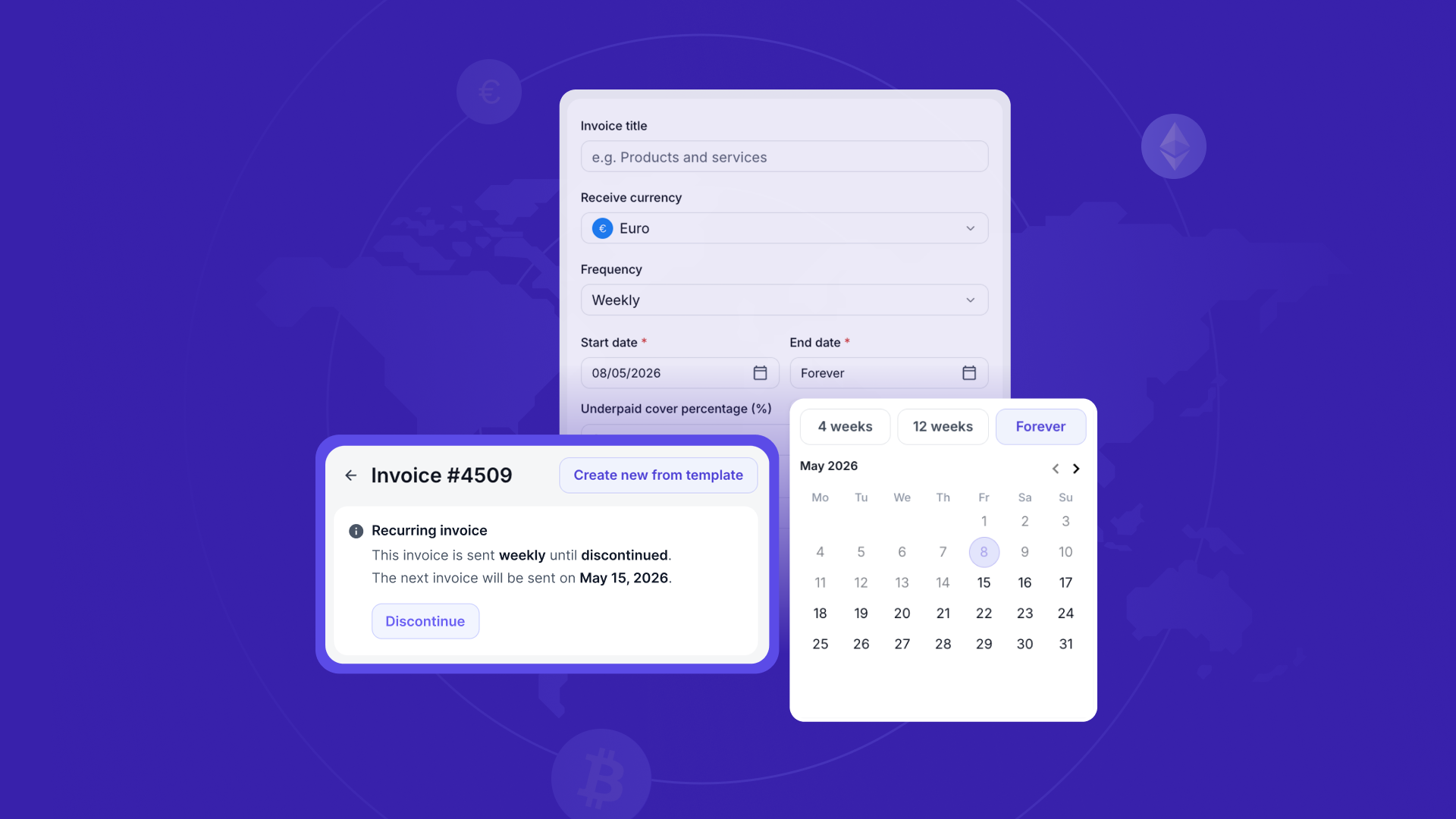
Can you charge a customer’s crypto wallet automatically every month, the way a card subscription works?
The answer is no. And most articles about recurring crypto payments will spend two thousand words avoiding that sentence.
We’d rather start with it, because once you understand why crypto works this way, the actual solution becomes obvious. Businesses bill the same clients in crypto every month just fine. They simply do it differently than card processors do, and in some ways, more cleanly.
Billing the same clients every month? Sign up for CoinGate.
The honest answer first: crypto payments are push, not pull
A card subscription works because your customer hands over their card details once, and the processor pulls money on schedule. The customer is passive. Sometimes too passive, which is why “I forgot to cancel” disputes and surprise-charge complaints exist.
Crypto was built on the opposite principle. Funds only move when the wallet owner signs the transaction. Nobody, including us, can reach into a customer’s wallet and take payment. Every payment is a deliberate push from the payer’s side.
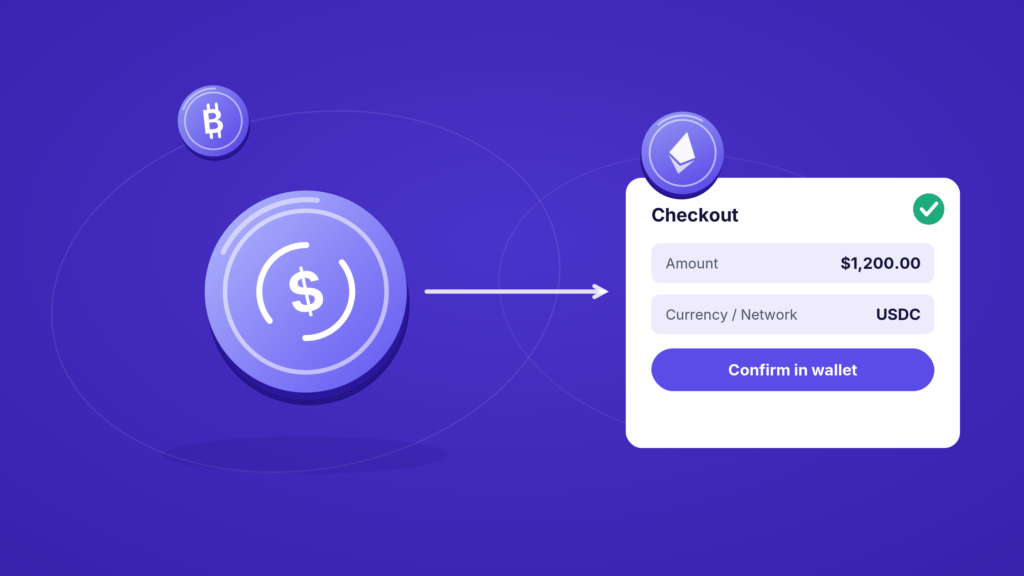
For the customer, this is a feature. No stored payment credentials waiting to leak, no zombie subscriptions draining a forgotten card. For you, the biller, it means one thing: instead of automating the charge, you automate the request.
So what does “recurring” actually mean in crypto?
It means the invoice is recurring, while the payment stays a one-click action for your client.
The workflow looks like this. A bill is generated on your schedule, monthly, quarterly, whenever. Your client receives it by email or as a payment link. They open it, see a guided checkout, pick a currency and network, and pay from whatever wallet they use. You see the status change in your dashboard.
Done well, this takes your client under a minute a month. However, “done well” is doing some work in that sentence. If your version of crypto billing is emailing a wallet address and an amount, you’ll spend your month matching anonymous transactions to clients and chasing people who sent the wrong token on the wrong network. We’ve watched businesses hit exactly that wall as they grow.
Who bills clients in crypto on repeat
This pattern fits any business with named clients and repeating amounts:
- Agencies and service providers on monthly retainers, especially with international clients whose bank transfers cost more than the coffee budget.
- Hosting, proxy, and infrastructure companies with subscription renewals. The proxy industry in particular runs on crypto, so for them this is less an experiment and more table stakes.
- B2B partnerships settling recurring amounts, where both sides already hold stablecoins and a bank wire would only add days and fees.
If your clients already pay in stablecoins at checkouts, billing them in crypto is not a stretch. It’s meeting them where their money already lives.
The workflow in practice
Here’s how this runs on our Billing solution, step by step. Other tools exist, but the logic transfers.
Create the bill once, reuse it forever
You build an itemized bill with your products or services and save your client’s contact details. Next month, you don’t start from scratch. You reuse the saved bill, adjust if needed, and send. The repeat work shrinks to almost nothing.
Send by email or link, no integration needed
The bill travels as an email or a secure link you can drop anywhere: invoice email, Slack, CRM, support thread. Your client doesn’t need a CoinGate account. They need a crypto wallet and one free minute.
Get paid in 15+ currencies, settle in what you prefer
Your client chooses how to pay: BTC, ETH, USDC, and other supported assets across multiple networks. You choose what lands on your side: crypto, stablecoins, or EUR, GBP, and USD through real-time conversion. The client’s preference and your treasury policy never have to argue.
Track everything in one place
Paid, pending, and canceled bills sit in one dashboard with timestamps and exportable records. When a client says “we sent it,” you don’t dig through a block explorer. You look at the status.
When to automate via API

Dashboard billing works while the client list is short. Once you’re sending dozens of bills a cycle, generate them from your own system instead. Our API lets you create bills programmatically, on your schedule, with status callbacks flowing back into your back office. The same logic we’ve described for automating payouts applies to collecting.
A reasonable rule: when bill creation starts eating hours rather than minutes, automate it. Not before.
Getting the accounting right
Recurring billing produces a clean paper trail almost by accident. Every bill has an itemized record, a status, and a timestamp, and the history exports in a few clicks.
The one decision that shapes your books is settlement currency. Receive euros and your accounting looks like ordinary invoicing. Hold crypto and you’re tracking digital assets. Our guide for finance teams covers both paths, and it’s worth reading before you pick one.
The request is automatic. The trust is the point.
Recurring crypto payments work, as long as you stop expecting them to imitate card subscriptions. The charge can’t be automated. Everything around it can: the bill, the delivery, the tracking, the records. What remains is a client who actively confirms they’re happy to pay you each month. Frankly, that’s not the worst signal to receive twelve times a year.
Tired of chasing the same invoice every month? Start with us.
Frequently asked questions
Can crypto payments be pulled from a wallet automatically?
No. Crypto transactions require the wallet owner’s authorization every time. Recurring crypto billing automates the request, never the charge.
Does my client need an account to pay a bill?
No. They open the link, choose a currency and network, and pay from any compatible wallet.
Which cryptocurrencies can clients pay with?
15+ assets across multiple networks, including BTC, ETH, and USDC. The current list is here.
What happens if a bill isn’t paid?
It stays pending until it expires or you cancel it. You see unpaid bills at a glance, which makes follow-up a routine instead of detective work.
Can I receive fiat even though clients pay in crypto?
Yes. You can settle in EUR, GBP, or USD via real-time conversion, or keep crypto and stablecoins. Your choice, per your accounting needs.
Accept crypto with CoinGate
Accept crypto with confidence using everything you need in one platform.