


Accept crypto with CoinGate
Accept crypto with confidence using everything you need in one platform.
The Real Cost of Chargebacks for Digital Businesses (and How Crypto Eliminates Them)
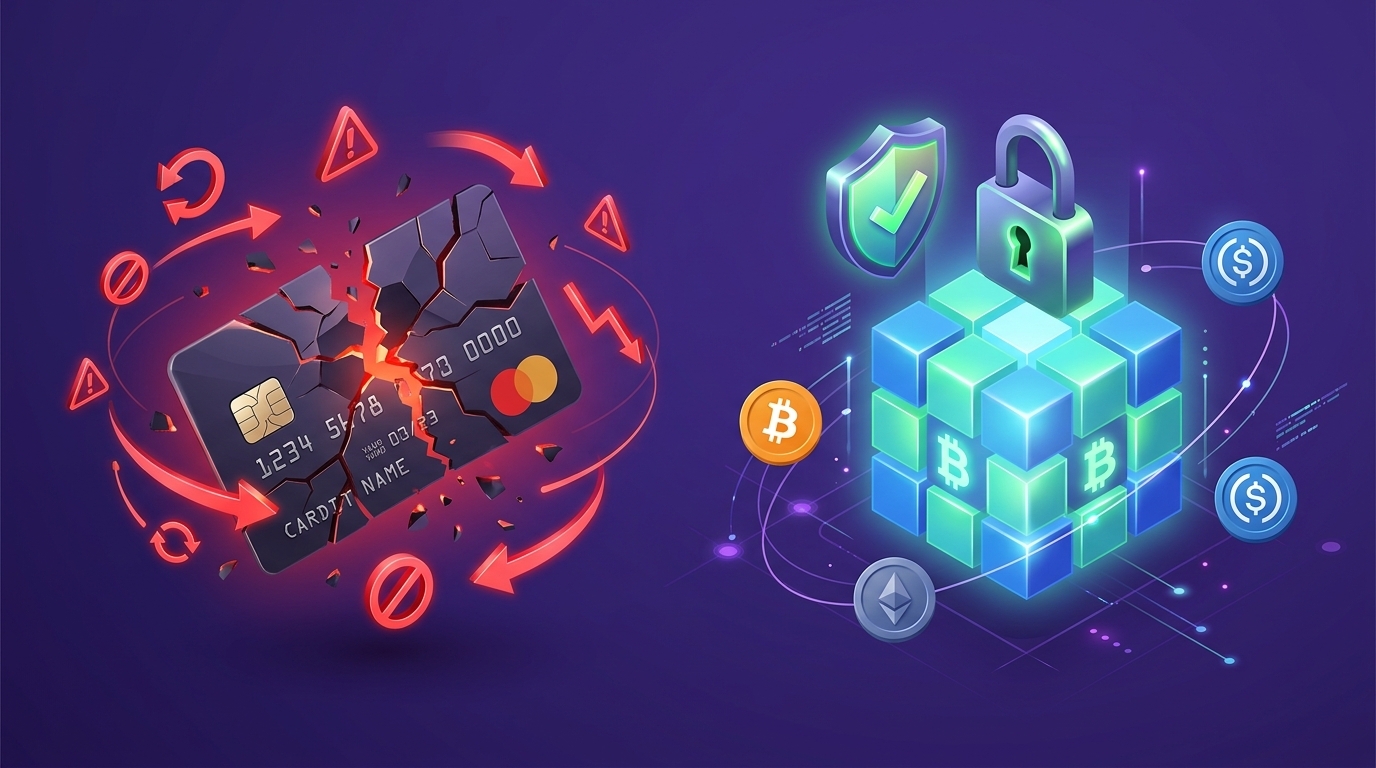
How much did chargebacks cost your business last quarter? If you’re not sure, you’re not alone. Most digital businesses track chargeback counts but rarely calculate what they actually lose per dispute. And that blind spot is expensive.
Globally, chargebacks are projected to cost eCommerce businesses $33.79 billion in 2025, growing to $41.69 billion by 2028. Volume is climbing too. Mastercard and Datos Insights project 261 million chargebacks in 2025, reaching 324 million by 2028.
If you’re running a SaaS platform, hosting company, VPN, or proxy service, these numbers matter. Digital businesses sit right in the crosshairs of the chargeback problem. And while there are dozens of mitigation tools on the market, one option eliminates the problem at its root: cryptocurrency payments.
Think it’s time to introduce cryptocurrency operations to your business? Sign up for CoinGate.
What Chargebacks Actually Cost (Beyond the Transaction)
When a customer disputes a $100 charge, you don’t lose $100. You lose far more.
According to LexisNexis Risk Solutions, for every $1 lost to chargebacks, U.S. merchants incur $3.75 to $4.61 in total costs. That’s a 37% increase compared to 2020 levels.
The Direct Costs
Let’s break down what happens when a single $100 chargeback hits your account:
- Transaction reversal: $100 returned to the customer.
- Chargeback fee: $15 to $100, depending on your processor (non-refundable, even if you win the dispute).
- Original processing fee: ~$3 to $4 that you already paid on the transaction.
- Cost of service delivered: If you’ve already provided the digital service, that cost is gone.
- Operational labor: Evidence gathering, documentation, submission through processor portals. Industry data suggests 40 to 60 minutes per dispute for in-house teams.
A single $100 chargeback easily becomes a $180 to $200+ loss. For digital services with high margins, that might sound manageable in isolation. But chargebacks rarely come in isolation.
The Hidden Costs
Beyond individual disputes, chargebacks create systemic costs that compound over time:
- Technology spending: Merchants spend $100,000 to $500,000 annually on chargeback prevention and management technology.
- Lowered bank authorization rates: High chargeback activity signals risk to issuing banks, which tighten fraud filters and decline more legitimate transactions.
- Customer acquisition waste: The marketing spend that brought a customer to your checkout page disappears with the chargeback. For businesses spending 7 to 10% of revenue on acquisition, that’s a meaningful hit.
- Reserve account requirements: High-risk merchants may be forced to maintain frozen reserve funds with their processor, locking up working capital.
The net recovery rate tells the harshest story. Even when merchants contest chargebacks, the net recovery rate sits at only 12% to 18%. That means for every 100 chargebacks you fight, you recover on roughly 12 to 18 of them.
Why Digital Businesses Get Hit the Hardest
Not all industries experience chargebacks equally. Digital goods and subscription services carry a 1.85% chargeback rate, the highest of any sector, according to the source. Compare that to B2B SaaS at 0.15% or restaurants at 0.12%.
Why the disparity? Several factors stack against digital businesses:
Card-not-present (CNP) transactions dominate. When there’s no physical card swipe, fraud risk increases. CNP transactions now make up 63% of merchant volume globally, and their chargeback rates range from 0.6% to 1%, well above the 0.5% average for card-present transactions.
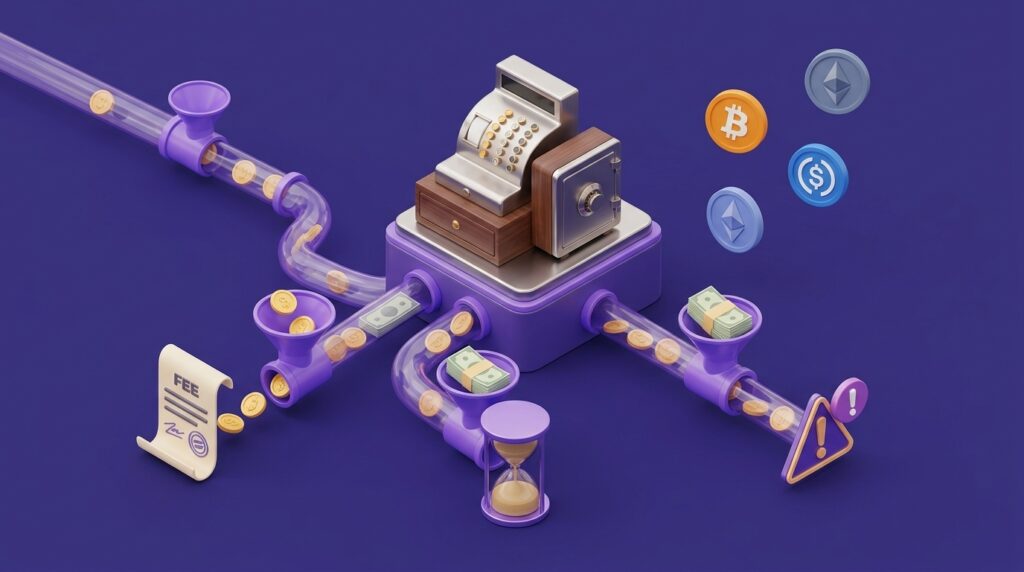
Friendly fraud is rampant. This is the real killer. Friendly fraud occurs when a legitimate customer makes a purchase, receives the service, then disputes the charge anyway. Previously cited studies place friendly fraud at 40% to 75% of all chargebacks depending on the source, with 84% of customers saying they find filing a chargeback simpler than requesting a refund from the merchant. For digital services like VPN subscriptions, proxy access, or SaaS tools, there’s no physical product to return. The customer gets the service, files a dispute, and the merchant eats the cost.
Subscription billing creates confusion. Recurring charges are a common trigger for disputes. Customers forget they signed up, don’t recognize the charge on their statement, or simply want to cancel but don’t bother going through the proper process. Mastercard’s research notes that subscription-based chargebacks are often low-value individually, but the chargeback fee alone frequently exceeds the subscription price, making every dispute a net loss.
When Bad Gets Worse: Chargeback Monitoring Programs
If your chargeback rate climbs too high, the card networks don’t just charge fees. They put you on a watchlist.
Visa’s VAMP (Visa Acquirer Monitoring Program) consolidated multiple monitoring programs into a single framework in 2025. The “Excessive” merchant threshold sits at a VAMP ratio of 1.5% (combined fraud and disputes), dropping to 0.9% in April 2026 for the U.S., Canada, EU, and Asia-Pacific regions. Merchants above this threshold face $10 per dispute in penalties, on top of standard fees..
Mastercard’s Excessive Chargeback Merchant (ECM) program sets its standard threshold at 100+ chargebacks per month combined with a 1.5%+ chargeback-to-transaction ratio. The high tier kicks in at 300+ chargebacks and a 3%+ ratio. Fees escalate month over month by design, pressuring merchants to fix the problem fast.
Well before termination, a rate that stays high gets the account reclassified as high risk, which arrives as a higher rate and a rolling reserve rather than a phone call.
The worst-case outcome? Account termination. Your payment processor revokes your ability to accept cards entirely. For a digital business, that’s an existential threat.
And the data from Mastercard’s 2025 study drives the point home: nearly 1 in 5 small businesses impacted by chargeback fraud had to file for bankruptcy.
How Crypto Payments Eliminate Chargebacks Entirely
Here’s where the conversation shifts from problem to solution.
Cryptocurrency payments are push-only transactions. The customer initiates and confirms the payment. Once it’s recorded on the blockchain, it cannot be reversed by a third party. There is no issuing bank to call. There is no dispute portal to file through. The transaction is final.
This isn’t a workaround or a mitigation strategy. It’s a structural difference in how the payment works.
With traditional card payments, funds flow through a chain of intermediaries (customer, issuing bank, card network, acquiring bank, merchant), and any link in that chain can initiate a reversal. With crypto, the payment goes directly from customer to merchant. One direction. No intermediaries with reversal authority.
For digital businesses, this means:
- Zero chargebacks on crypto transactions.
- No monitoring program risk from crypto payments.
- No chargeback fees, dispute labor, or representment costs.
- Lower processing fees: crypto payment processors like CoinGate charge 1% fee or lower, compared to the 1.5% to 3.5% typical of credit card processing.
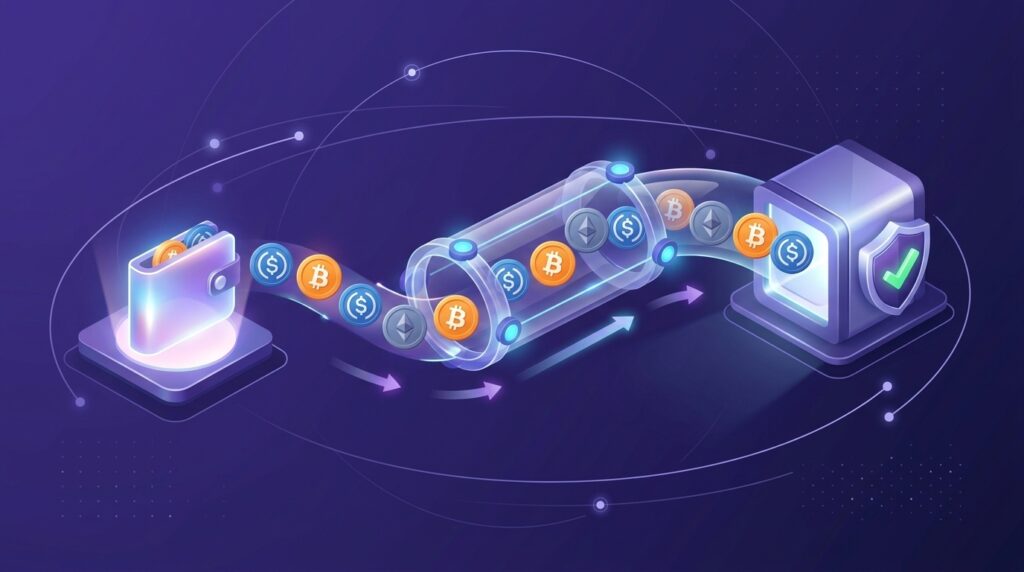
On top of that, crypto transactions settle faster than traditional bank transfers. No waiting days for wire transfers or ACH processing. Payments confirm in minutes, or seconds on Layer 2 networks like Base, Optimisim, or Lightning Network.
But What About Legitimate Disputes?
A fair question. If crypto payments can’t be reversed, what happens when a customer has a legitimate complaint?
This is where refund systems come in. At CoinGate, we pioneered crypto refunds, giving merchants a proper dispute resolution tool that doesn’t rely on the chargeback mechanism. If a customer has a valid reason for a refund, the merchant can process it directly through our platform.
The key difference: the merchant stays in control. Refunds are voluntary, merchant-initiated actions. The customer doesn’t get to bypass you and go straight to a bank. You review the situation, decide whether a refund is warranted, and process it on your terms.
This puts the balance of power back where it should be. Legitimate complaints get resolved. Friendly fraud gets stopped at the door.
And, if you want, you can even automate refunds via API.
How Squaretalk Eliminated Chargebacks with CoinGate
Squaretalk, a UCaaS (Unified Communications as a Service) platform operating in over 150 countries, integrated crypto payments specifically to solve their chargeback problem.
Credit card chargebacks had been a costly and persistent issue for Squaretalk. International clients dealing with slow bank wires and restrictive payment systems added another layer of friction. Traditional finance, as their CEO Elie Rubin put it, was “too slow, restrictive, and costly for many of our fintech and international clients.”
After integrating CoinGate, the results were immediate:
- Chargebacks dropped to zero on crypto transactions
- International settlements became instant, particularly for clients in regions with slow banking infrastructure
- Full regulatory compliance was maintained. Customers go through KYC with CoinGate before making a payment, and every crypto payment is instantly converted to euros to avoid volatility exposure
- Integration took days, not weeks, without requiring changes to existing workflows
“One of the biggest wins has been the elimination of chargebacks, a common and costly issue with credit card transactions. With crypto, every transaction is final, removing a layer of uncertainty from the billing process,” said Elie Rubin in our case study.
Squaretalk’s approach highlights an important point. They didn’t replace card payments with crypto. They added crypto as a complementary option, routing the customers most likely to cause chargeback friction toward a payment method that eliminates it.
It All Adds Up
Chargebacks cost digital businesses far more than the transaction amount. They drain operational resources, trigger monitoring programs, increase processing costs, and in extreme cases, shut businesses down entirely.
The traditional approach is to fight chargebacks with better documentation, fraud detection tools, and chargeback alert services. These tools help, but they’re treating symptoms. The underlying vulnerability remains: card payments allow third-party reversals, and that mechanism will always be exploitable.
Crypto payments remove that vulnerability at the protocol level. No reversals, no disputes, no escalating fees. Just confirmed, one-directional payments with lower processing costs and faster settlement.
Companies like Squaretalk, NordVPN, PlainProxies, and Ping Proxies have already made the shift with CoinGate. The chargeback savings alone often justify the integration.
Thinking chargebacks are eating into your margins more than they should? Start accepting crypto with CoinGate and see the difference in your next quarterly report. First step? Sign up.
Accept crypto with CoinGate
Accept crypto with confidence using everything you need in one platform.