


Accept crypto with CoinGate
Accept crypto with confidence using everything you need in one platform.
Why Dedicated Deposit Addresses Are the Future of Crypto Payments
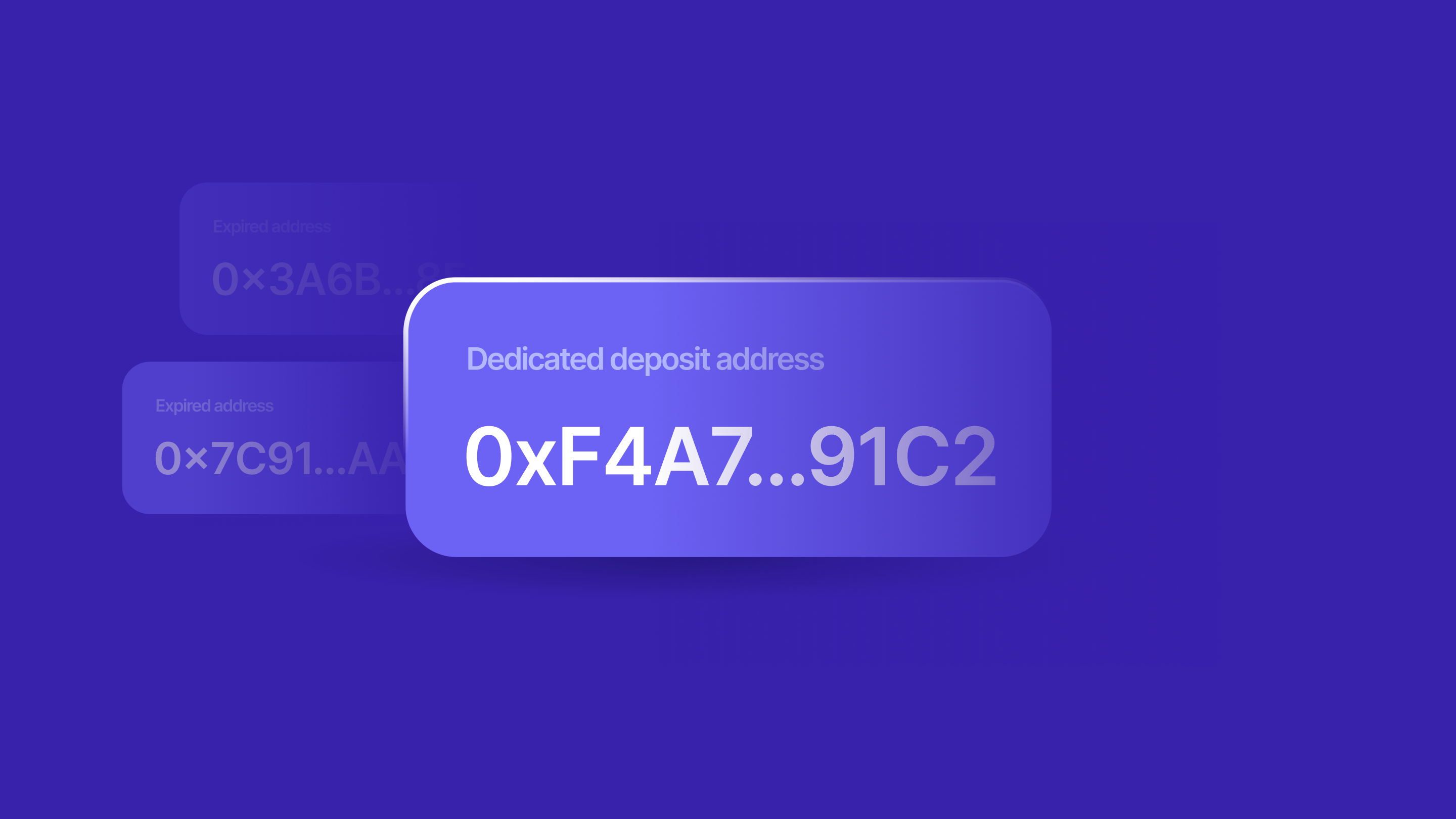
If you’ve ever had to generate a new crypto invoice every time one of your clients deposits funds, you already know the problem. The address expires, the reconciliation is a mess, and your clients are asking why they can’t just save one address and use it forever.
They’re asking the right question.
The invoice-per-deposit model has been the standard in crypto payments for over a decade. It was designed for a world where each crypto transaction was a standalone purchase. One buyer, one product, one payment, done. But the businesses using crypto in 2026 look nothing like the early adopters of 2014.
They process recurring deposits from the same clients, at high frequency, and the one-address-per-transaction model has become a bottleneck they no longer have to accept.
There’s a better architecture gaining traction across the industry: dedicated deposit addresses or, how we call it, payment channels. It’s not a theoretical concept or something on some distant product roadmap. Providers are already offering it, and merchants are already migrating.
Think it’s time to introduce cryptocurrency operations to your business? Sign up for CoinGate.
Here’s what dedicated deposit addresses are, why they matter, and what to look for if you’re considering the switch.
What Is a Dedicated Deposit Address?
The concept is easier to understand than the name might suggest.
A dedicated deposit address is a blockchain address that gets assigned to a specific client once and remains active indefinitely. The client deposits to the same address every time. No new invoices, no address rotation, no expiration. Your system detects each incoming deposit automatically and attributes it to the correct client.

Think of it like a dedicated bank account number for each of your clients. You give them the number once, they use it whenever they need to deposit. You don’t issue a new account number every time they want to make a transfer.
Contrast that with the current standard: every time a client wants to deposit, the system generates a fresh address tied to a one-time invoice. The address works for that single transaction. After that, it’s effectively dead. Next deposit, new address, new invoice, same cycle.
The difference might seem incremental at first glance. But consider a business with 300 clients depositing weekly. Under the invoice model, that’s 15,600 unique addresses per year to generate, communicate, track, and reconcile. Under the persistent model, it’s 300 addresses, total. The operational gap between those two numbers is where the real cost lives.
Why the Industry Is Moving This Way
Four forces are driving this shift, and they’re converging at the same time.
Recurring deposit use cases are growing
Crypto has expanded well beyond retail e-commerce. B2B platforms, ad networks, trading venues, and marketplaces now account for a significant and growing share of crypto transaction volume. These businesses have clients who deposit repeatedly, sometimes multiple times per week. The invoice-per-deposit model was never designed for this level of repeat interaction.
Client experience expectations are rising
B2B clients in 2026 expect the same convenience from crypto deposits that they get from traditional banking. Saving a bank account number for wire transfers is second nature. Getting a new deposit address every time feels like a step backward. When your clients start asking “can’t I just have one address?”, they’re telling you that the current model isn’t meeting their expectations.
Automation demand is accelerating
Businesses want to eliminate manual reconciliation entirely. The combination of persistent addresses and webhook-based deposit detection makes true zero-touch deposit processing possible. Deposit arrives, system gets notified, client account credited, settlement initiated. No human intervention at any step.
Compliance pressure favors cleaner structures
This one is often overlooked but it’s becoming increasingly important. Regulatory frameworks like MiCA in the EU require businesses to maintain clear audit trails for crypto transactions.

One dedicated address per client creates a clean, chronological record of all deposits from that client on a single address. Thousands of one-time addresses scattered across the blockchain create a compliance puzzle that’s expensive to maintain and hard to audit.
Regulators don’t care how convenient your deposit flow is for your clients. They care about traceability. Dedicated addresses make traceability a default, not an afterthought.
Together, these four drivers are making dedicated addresses the logical next step for any business that processes recurring deposits. The question is no longer whether the industry will adopt this model. It’s how quickly individual businesses will make the transition.
How It Works in Practice
The implementation, regardless of provider, follows a consistent three-step flow:
Step 1: Assign
The merchant creates a persistent deposit address and assigns it to a specific client. This can be done through an API call or, with some providers, directly from a merchant dashboard. The address is linked to the merchant’s account and tagged with the client’s identifier.
Step 2: Deposit
The client sends crypto to that address at any time. There’s no invoice to generate, no expiration to worry about, no new address to request. The address works today, next week, and six months from now.
Step 3: Detect and settle
When a deposit arrives, the merchant’s system receives a webhook notification from the provider. The deposit is automatically attributed to the correct client based on the address mapping. Settlement happens according to the merchant’s preferences, either in crypto or auto-converted to fiat (EUR, USD, GBP).
That’s the entire flow. No invoices, no address rotation, no manual reconciliation. The complexity that used to sit on the merchant’s side gets absorbed into the infrastructure.
For the client, the experience is simple enough that it requires no explanation. “Here’s your deposit address. Send crypto to it whenever you want.” That’s the entire onboarding conversation. Compare that to explaining invoice expiration windows, address uniqueness, and why they need to request a new address every time.
What to Evaluate in a Provider
Not all dedicated deposit address providers are the same. The core functionality might seem similar on the surface, but the differences in execution matter significantly, especially if you’re operating in a regulated environment or processing high volumes.
Here’s what to look at:
- Regulatory status. Is the provider licensed? Under which regulatory framework? If you’re operating in or serving EU-based clients, MiCA compliance is becoming a baseline requirement. A provider without proper licensing exposes you to regulatory risk.
- Full platform vs. single feature. Does the provider offer dedicated deposit addresses as part of a broader platform (payments, payouts, treasury), or is it a standalone feature? Consolidating your crypto operations under one vendor reduces integration complexity and vendor management overhead.
- Fiat settlement. Can deposits be auto-converted to EUR or USD at the time of settlement, or are you required to hold crypto? For businesses that prefer fiat-denominated revenue, this is a critical capability.
- API quality. Is the API well-documented? Are webhooks reliable and timely? Can address creation and management be fully automated? The quality of the developer experience will determine how fast you can integrate and how reliably it runs in production.

- Compliance tooling. Does the provider handle AML screening, transaction monitoring, Travel Rule data collection, and audit trail generation? If not, those responsibilities fall on you, and they’re not trivial.
- Asset coverage. How many blockchain networks and crypto assets are supported? At minimum, you’ll want BTC, ETH, and USDC coverage. Broader asset support means a wider range of clients can deposit in their preferred currency.
The evaluation criteria might seem standard, but the differences between providers are larger than most merchants expect. Especially on compliance and platform depth, the gap between the best and the rest is significant.
Before committing, ask the provider how they handle edge cases. What happens when a deposit arrives in an unsupported token? How are underpayments handled? What’s the latency between deposit detection and webhook notification? These details reveal the maturity of the implementation more than any feature comparison table.
Where We’re Headed
Dedicated deposit addresses are not a novelty or an incremental feature. They represent a fundamental shift in how businesses handle recurring crypto deposits. The invoice-per-deposit model served the industry well for its first decade. But the businesses using crypto today have outgrown it.
The shift is already happening. Providers are launching dedicated address capabilities. Merchants are migrating away from invoice-based flows. And the businesses that move first will have cleaner operations, better client experiences, and stronger compliance postures than those that wait.
If you’re currently running invoice-per-deposit workflows for recurring clients, you’re not behind the curve yet. But the window for catching up is narrowing. The operational advantages of dedicated addresses compound over time, and the longer you wait, the more invoices you’ll generate for no good reason.
At CoinGate, we’re running dedicated deposit address infrastructure as part of our regulated crypto payment platform. We call it payment channels, and any CoinGate account can open one right now.
If this is a problem you’re already feeling, you’re not alone. And the solution is closer than you think.
Not a CoinGate client yet? Sign up first.
Accept crypto with CoinGate
Accept crypto with confidence using everything you need in one platform.